Find your fit

vCISO or fractional Chief AI Officer: which seat do you need?

Both seats deal with risk and both touch AI, so the line between them blurs fast. Here is the plain version. A virtual CISO owns your security program, all of it, including the AI tools your people already use. A fractional Chief AI Officer owns your AI program: what you build, what it has to earn, and how it stays governed. The two meet on AI security, and at large companies that part rarely sits with the CISO. An October 2026 IANS Research benchmark of 1,400 CISOs and security professionals found only 7% of CISOs at companies above $10 billion in revenue own AI governance.

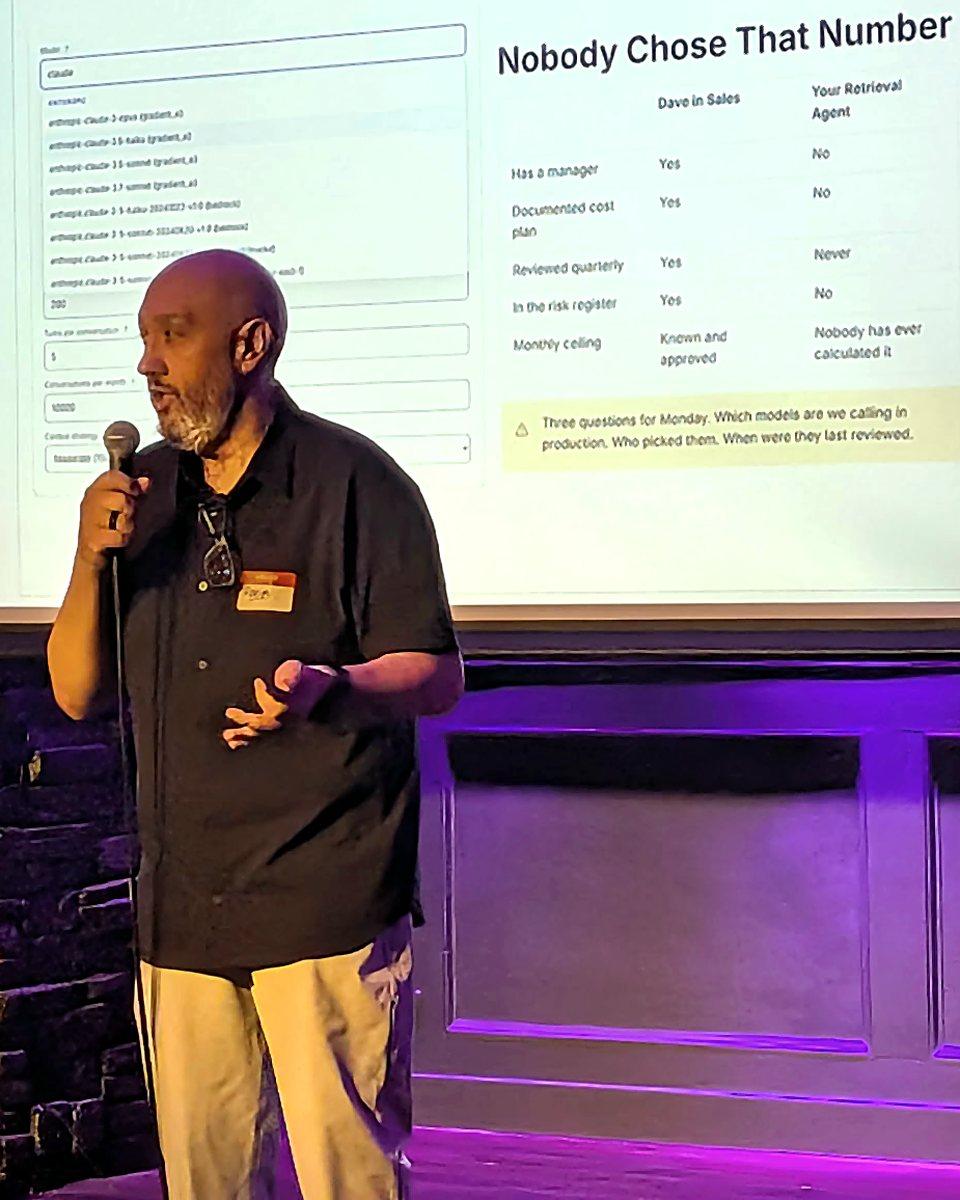
Rock Lambros speaking in front of a slide titled Nobody Chose That Number, comparing how a sales hire and an AI agent are governed

Who owns what

Virtual CISO (vCISO)Fractional Chief AI Officer (vCAIO)
OwnsThe security program across the whole company: people, systems, vendors, and the AI tools in daily use.The AI program: which bets get funded, which models ship, who builds them, and to what standards.
The question it answersAre we protected, and can we prove it to the people who ask?Is our AI worth the money, and is it governed well enough to scale?
Measured byRisk in dollars, audit results, time to detect and respond.Return on each AI use case, time to production, regulatory readiness.
FrameworksNIST CSF, ISO 27001, SOC 2, plus your sector's rules.NIST AI RMF, the EU AI Act, ISO 42001, the OWASP Top 10 for LLMs, and the OWASP Top 10 for Agentic Applications.
Usually starts whenA customer questionnaire, an audit, or a board question about security lands and nobody owns the answer.AI money is moving faster than anyone can say what it returns or who signs off.

Five questions

Answer yes or no to each. I'll show you where I would start. If you'd rather read the rules yourself, every path and the reason for it is listed below.

  1. Are you looking for independent judgment for a board, investors, or a portfolio, rather than someone to run the work?

    Board members and VC or PE firms usually answer yes.

  2. Does someone with real authority own security today, a CISO or a security lead?

    An IT manager who also handles security counts as a no.

  3. Are customers, auditors, or your board asking security questions you can't answer with confidence?

    Questionnaires that stall deals count.

  4. Is AI part of what you sell, or a bet you are funding, beyond the tools your people use day to day?

    Copilots and chat assistants for staff alone count as a no.

  5. Does one person own AI decisions today: which projects get funded, which models ship, and how they're governed?

    A committee that meets when something breaks counts as a no.

Answer all five to see where I would start.

The four ways in

Virtual CISO (vCISO)

Start here if nobody owns security, or the security questions coming in outrun your answers, and AI is mostly tools your people use.

You need someone in the CISO seat who builds the program, answers the questionnaire, and stands in front of the board. The AI tools already in use get governed inside that program, so you don't need a second executive for them.

How the vCISO work runs

Fractional Chief AI Officer (vCAIO)

Start here if security already has an owner and the answers hold up, but AI is a real bet and nobody owns it.

Your security leader keeps the security program. I take the AI portfolio: what gets funded, what it has to return, who builds it, and governance that maps to the NIST AI RMF, the EU AI Act, and ISO 42001. I work alongside your CISO on AI security so nothing falls between the two seats.

What a fractional CAIO covers

Both seats, one person

Start here if you have a security gap and an AI program with no owner.

One engagement where I hold both seats. The security program and the AI program run from the same risk register and report to the board in one voice, so the overlap on AI security has a single owner instead of two people assuming the other has it. RISE and CARE were built as a pair for this case. We start with whichever gap is costing you more and bring the other in on a schedule we agree up front.

Talk about both seats

Board & Advisory

Start here if security and AI both have owners and what you want is independent judgment over them, for your board, your investors, or your portfolio.

You don't need someone running a program. You need someone who has run one to test the plan, pressure the numbers, and tell the board what they need to decide. That's an advisory or board seat, without the day-to-day.

Advisory and board seats

Questions I get about choosing

Does a virtual CISO cover AI?
Yes, for AI as something your company uses. A vCISO governs the AI tools in daily use like any other system: who can use them, what data goes in, and which vendors get trusted. What a vCISO doesn't own is the AI strategy: which AI bets to fund and what they have to return. That's the Chief AI Officer's job.
Can one person hold both seats?
Yes, and for a mid-sized company it is often the cleanest setup, because the overlap on AI security never falls between two people. At larger companies the seats usually split, and I take one and work alongside whoever holds the other.
Can you sit on our board and also be our vCISO or vCAIO?
No. A board oversees the people running the work, and I can't independently oversee a program I run. The listing rules say the same thing: under Nasdaq's rules a director paid more than $120,000 in consulting fees in any twelve months is not independent, and an audit committee member can't accept any consulting fee at all. In the operating seat I report to your board as the executive. If your board wants independent judgment on that program, it should come from someone other than the person running it.
If I need both, which comes first?
Whichever gap is costing you more right now. A stalled deal or an audit finding usually means security first. A board asking what the AI budget returned usually means the AI seat first. We set the order in the first conversation.
What if I'm still not sure?
Start with a diagnostic. It is a fixed-scope engagement that names your real risks and tells you which seat, if any, you need, before you commit to a retainer.


Ready to talk?